A New Era for Renting in the UK - 2026
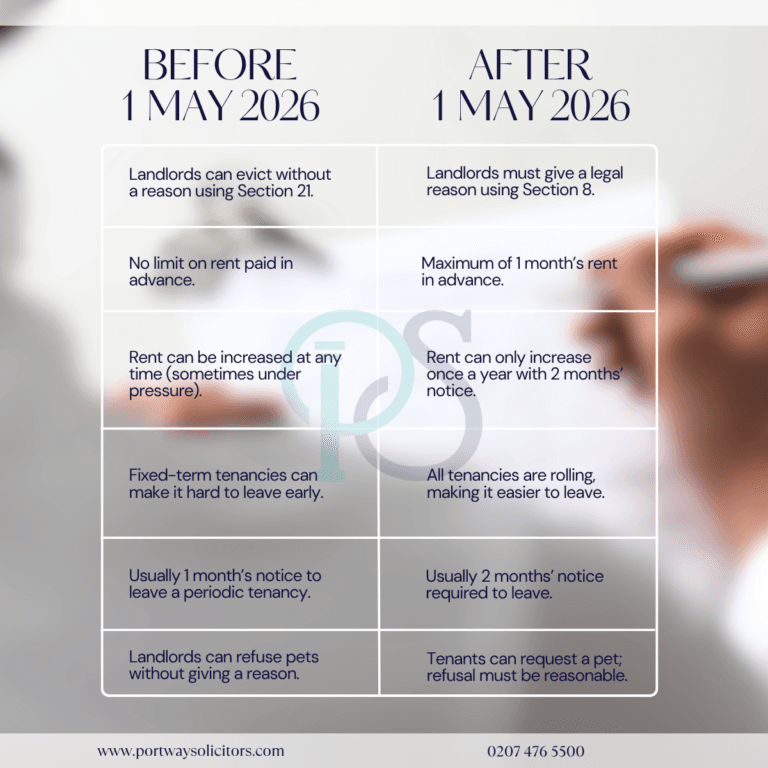
Renters’ Rights Act: Changes for Private Tenants from1 May 2026
Major tenancy law changes are coming on 1 May 2026
Here is what is changing and what it means for you.
YOUR LANDLORD WILL NEED A REASON TO EVICT YOU |
At the moment, your landlord can ask you to leave without giving any reason at all, using what is called a section 21 notice. From 1 May 2026, this will no longer be allowed (abolition of Section 21 notices) Instead, your landlord will have to provide a legal reason to evict you, for example, if you are behind on rent or they want to sell the property. |
LIMITS ON RENT IN ADVANCE |
Currently there is no legal cap on how much rent a landlord can ask for upfront. From 1 May 2026, landlords will only be able to ask for a maximum of one month’s rent in advance. Councils will have the power to fine landlords who ask for or accept more than this. |
YOU WILL HAVE THE RIGHT TO ASK FOR A PET |
At the moment, landlords can refuse to let you keep a pet without giving any reason. Under the new rules, you will be able to write to your landlord to request permission and they will only be able to say no if they have a genuine reason. They will normally have 4 weeks to reply with a little extra time if they need more information from you. |
MORE NOTICE BEFORE YOUR RENT GOES UP |
Your landlord will only be able to raise your rent once a year and they must give you at least 2 months’ written notice before doing so. If you think an increase is unfair, you will have the right to challenge it at a tribunal. The tribunal can set a lower rent if they agree the increase is unreasonable and your landlord will not be able to evict you simply for making a challenge. |
NO MORE FIXED-TERM TENANCIES |
Fixed-term tenancies are where you sign up for a set period (such as 12 months), will be phased out from 1 May 2026. If you currently have a fixed-term tenancy, it will automatically become a ‘periodic’ tenancy, meaning it rolls on week by week or month by month with no set end date. This gives you more flexibility and stronger protection from eviction. |
HOW MUCH NOTICE YOU WILL NEED TO GIVE |
When you want to leave your home, you will generally need to give your landlord 2 months’ notice. You may be able to give less if your tenancy agreement allows it or if your landlord agrees to a shorter period in writing. |